If you’re wondering how to future proof your career, you’re already ahead of most people. The majority won’t ask that question until they’re forced to — until a layoff, a restructure, or a job listing that didn’t exist five years ago leaves them scrambling. Here’s the reality: 85% of the jobs that will exist in 2030 haven’t been invented yet. And the skills that got you here might not be enough to get you there. This guide gives you ten concrete, battle-tested strategies to future proof your career starting right now — no fluff, no vague advice about “staying curious.” Just what actually works to future proof your career in 2026 — and keep it that way.
Here’s everything we’ll cover — jump to any strategy or read straight through:
Table of Contents
Why You Need to Future-Proof Your Career Right Now
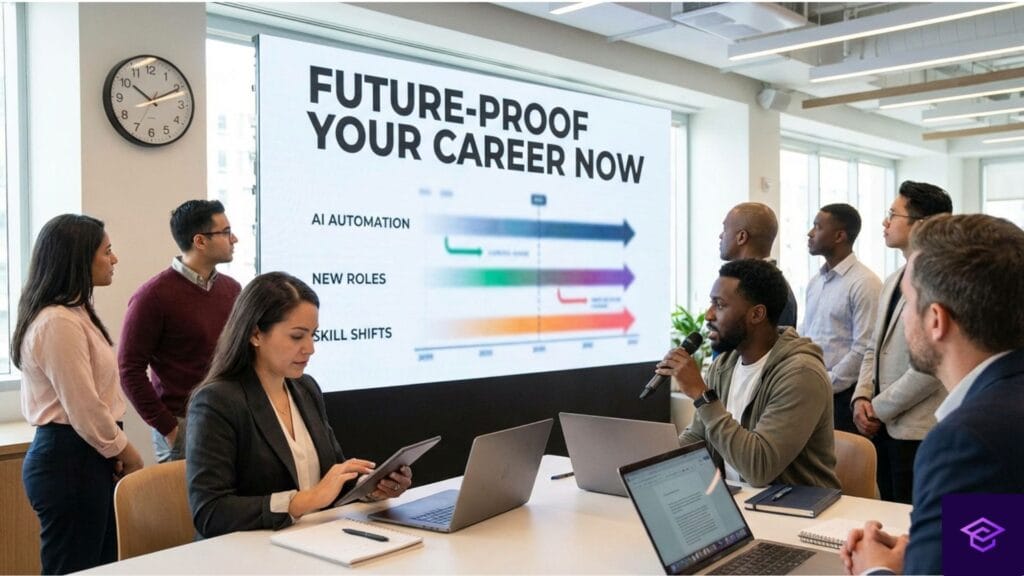
The job market is shifting faster than at any point in modern history. AI is automating tasks that took humans years to master. Entire departments are being restructured. And the workers are thriving right now? They didn’t wait — they figured out how to future proof your career before the pressure hit. “Social media manager” wasn’t a real job a decade ago. “Prompt engineer” didn’t exist two years ago. The people who know how to future proof your career are the ones who see these shifts coming and position themselves early. Everyone else plays catch-up. The question isn’t whether you need to future proof your career — it’s whether you’ll start before you’re forced to. Every day you delay is a day someone else gets ahead of you. That’s the real cost of not knowing how to future proof your career. Start now, and you’re already ahead of most people who will read this and do nothing to future proof your career.
Strategy 1: Know Your Career DNA Before You Try to Future Proof Your Career
Here’s what most career advice gets wrong when it comes to how to future proof your career: it skips the foundation. People who want to future proof their career jump straight to “learn Python” or “get a certification” without ever asking the most important question: Future—proof your career for what, exactly?
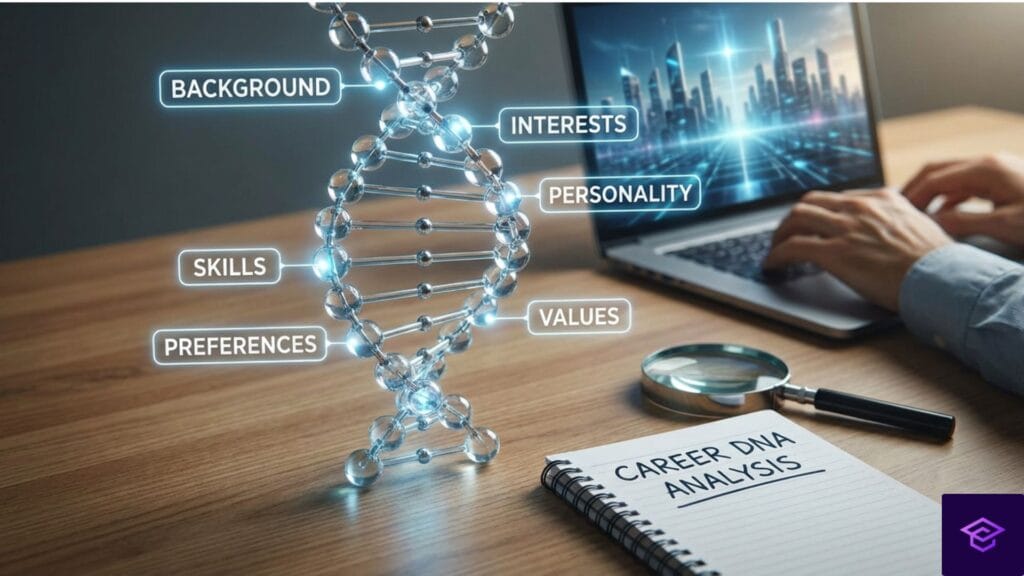
Before you can future proof your career effectively, you need to understand what makes you genuinely valuable. That means mapping your career across six core dimensions: your Background, Interests, Personality, Skills, Values, and Preferences. These aren’t just self-reflection exercises. They’re the data points that tell you which direction to move when you future-proof your career — and which skills are actually worth building to future-proof your career with precision.
How to Map Your Dimensions to Future-Proof Your Career
To future proof your career with this framework, begin by conducting an honest audit of each dimension. What skills from your background cross over and transfer across industries? What work do you really give a shit about? What are the values that, if not present, you won’t compromise in a workplace?
Knowing your career DNA allows you to make strategic moves with the precision that guessing can’t provide. You’re crafting an identity that is consistent, unique, and, to be honest, very difficult to replace. CareerMIND’s AI-assessment maps all six dimensions in roughly ten minutes and provides you with a personalized career profile that you can leverage to future-proof your career strategically the clearest starting point to future-proof your career which is cheaper than an hour’s consulting session from a mediocre career coach.
Want to know your career DNA right now? Take the CareerMIND dot app it takes 10 minutes and gives you a personalized roadmap built on your actual profile, not generic advice.
Strategy 2: Build T-Shaped Skills to Future-Proof Your Career
One of the most effective ways to future proof your career is to develop what’s called a T-shaped skill set. Deep expertise in one area — that’s the vertical bar of the T. Broad working knowledge across adjacent areas — that’s the horizontal bar. When you future proof your career this way, you become the person who can both execute and connect dots across functions.
Why does T-shaped skill-building build genuine career resilience? Because specialists get automated, generalists get overlooked, but T-shaped professionals get promoted. You’re deep enough to be genuinely useful and broad enough to adapt when your core skill shifts — which is exactly how you future proof your career against disruption long-term. Most people skip this. That’s why they can’t future proof your career when their industry pivots.

What T-Shaped Skills Look Like When You Future Proof Your Career
Let’s say you’re a data analyst who wants to stay employable long-term. Your vertical expertise is data analysis. Your horizontal skills might include communication, basic UX thinking, and business strategy. Now you’re not just a data person — you’re someone who can translate insights into decisions. That combination is much harder to replace, and it’s exactly how you future proof your career against automation — precisely because the T-shape is the most reliable skillset structure to future proof your career in almost any industry, bar none.
The key to this strategy when you want to future proof your career, is intentionality. Don’t randomly pick skills to learn. Go back to your six dimensions and ask: what horizontal skills amplify my vertical expertise? What breadth would make me more valuable in the direction I actually want to go? That’s how you stay ahead of the curve instead of just staying busy.
Strategy 3: Build a Visible Career Brand to Future-Proof Your Career Long-Term
Here’s a hard truth about how to future proof your career: skills alone aren’t enough. If nobody knows you have them, they don’t protect you. The most overlooked piece of how you future proof your career professionally is visibility — building a presence that makes opportunities come to you instead of you chasing them.
When you build a visible career brand, you future proof your career in a way skills alone never can. Visibility is how you future proof your career against the next round of layoffs without even being in the room. Share what you know, take positions on industry trends, and show your thinking in public. One well-articulated post per week does more to protect your career over five years than a resume update ever could. It builds a track record, attracts the right people, and signals you’re someone worth keeping when companies decide who stays. That’s how you future proof your career through visibility — and it’s more powerful than any certification. Visibility compounds. Every post you publish is another reason for the right person to future proof your career by choosing you over someone they’ve never heard of.

What to Publish to Future Proof Your Career Through Visibility
You don’t need to go viral to future proof your career through content visibility. Consistency beats virality every time when the goal is to future proof your career through a recognizable professional brand. You need consistency and a point of view. The most effective formats: short-form takes on industry news, lessons learned from real projects, and contrarian perspectives on conventional wisdom in your field. Any of these, published regularly, builds name recognition that makes you harder to ignore and harder to let go.
Strategy 4: Treat Learning as Infrastructure to Future-Proof Your Career
The people who consistently know how to future proof your career the ones who stay relevant decade after decade, share one habit: they’ve made continuous learning non-negotiable. If you want to future proof your career the way they do, learning can’t be reactive. Not “I’ll take a course when I feel behind,” they’ve built it into their schedule like meetings. Set aside 30 minutes daily for deliberate skill development, follow the people shaping where your industry is going, and read widely across fields.

Where to Focus Learning to Actually Future Proof Your Career
Not all learning is equal when it comes to how to future proof your career. Prioritize three categories: human skills like communication and critical thinking, AI fluency, and deep industry expertise that goes beyond surface level. Combine all three, and you’ve built a learning portfolio that will future proof your career across multiple shifts — not just the current one. That’s the real goal when you future proof your career through learning: positioning for what’s next, not just what’s now. Build this habit and you’ll future-proof your career through every market shift that comes.
Strategy 5: Build a Career Network That Can Future-Proof Your Career When Things Shift
When industries restructure or layoffs hit, your network is the single most powerful asset you have to future-proof your career. The people who can future-proof your career faster than any skill. It determines whether you find out about the right opportunity before it’s publicly posted. A strong network doesn’t just help you find jobs — it actively keeps you informed, connected, and visible to the people making decisions.
Invest consistently before you need anything. Reach out, share useful content, and make introductions. That kind of relationship-first network will future proof your career in ways a resume never can.

The Inner Circle Strategy to Future-Proof Your Career Through Relationships
To future proof your career through relationships, focus on depth over breadth. Maintain genuine relationships with 15 to 20 people across different industries, seniority levels, and functions. These are the people who’ll flag opportunities early and advocate for you when it counts. Schedule 30 minutes per week to nurture them — one check-in, one article share, one congratulation. Small, consistent actions compound into the kind of relationships that help you future proof your career when you need it most. People who know how to future proof your career through relationships never have to cold-apply for a job again — and that’s a position worth building toward.
Strategy 6: Align Your Career With Your Values to Future Proof It for the Long Run
Here’s what nobody talks about: sustainability. You can build all the right skills, nail visibility, grow the network — and still burn out in five years if you’re optimizing for the wrong thing. People who are genuinely energized by their work outperform and outlast people grinding through misalignment. When you future-proof your career around your values, you build something you can actually sustain — and sustaining your momentum is what separates people who future proof your career successfully from people who cycle through burnout and reset.
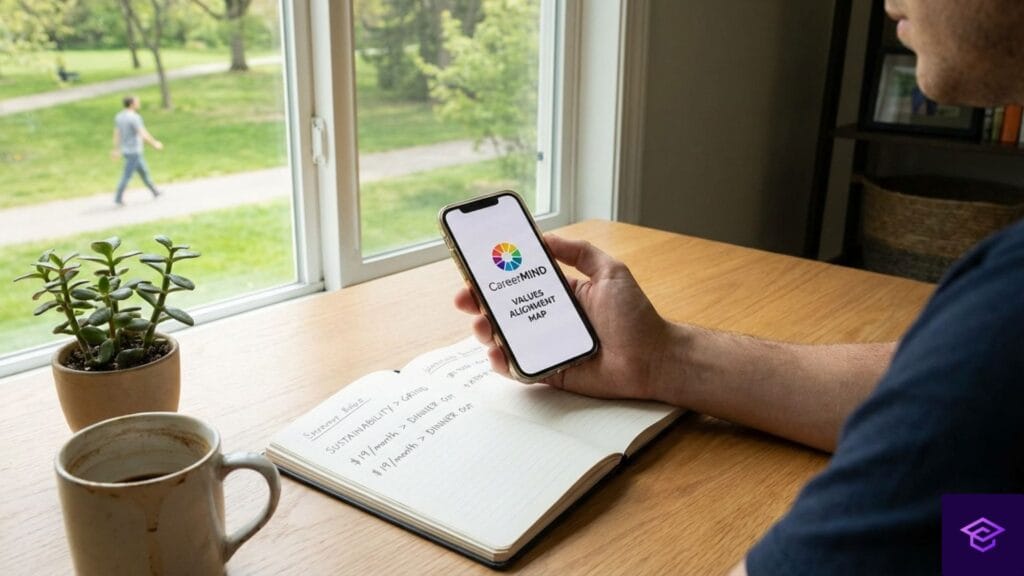
Ask yourself honestly: Does your current path reflect what actually drives you? If the answer is no, that’s the most important thing to fix when you want to future-proof your career for the long run. No amount of skill-building will future-proof your career if you’re heading in the wrong direction. Values alignment isn’t soft advice — it’s the foundation that makes everything else sustainable. You simply cannot future-proof your career long-term on a foundation of misalignment. Knowing your values is how you future proof your career against burnout as much as against disruption.
Not sure if you’re heading in the right direction? CareerMIND dot app maps your values alongside five other career dimensions to show you which paths actually align with who you are — for $19/month, less than a dinner out.
Strategy 7: Master AI as a Tool to Future-Proof Your Career Against Automation
The threat isn’t AI itself. The threat is the person in your field who’s already using AI better than you. The professionals who know how to future proof your career in this environment aren’t avoiding AI — they’re treating it like a power tool. You don’t need to code. You need habits around using these tools to amplify your output — AI handles research, drafting, and analysis while you add the human layer of judgment and accountability that AI still can’t replicate.

Where to Start Using AI to Future-Proof Your Career
The fastest way to future-proof your career with AI: pick one tool, ChatGPT, Claude, or Gemini, and use it daily in your actual work. This is how you future proof your career against the automation wave without needing a CS degree. The people who know how to future proof your career in the AI era aren’t engineers; they’re professionals who use AI to multiply their output. Write first drafts, brainstorm solutions, summarize research, and prep for meetings. Document what works. Within 90 days of consistent use, you’ll have a genuine edge and a concrete story that demonstrates career adaptability. Think of it as a stack: AI handles speed and scale, you handle context and judgment. Master that combination and you’re effectively one and a half times more productive than a peer who isn’t — the kind of advantage that compounds over years and makes it significantly easier to future-proof your career decade after decade.
Strategy 8: Build Financial Resilience to Future Proof Your Career Options
This one doesn’t get talked about enough. You cannot future-proof your career if financial pressure is forcing every decision. When you’re living paycheck to paycheck, you can’t afford to take a pay cut to move into a growing field, leave a toxic role, or invest in skills upfront. Financial resilience is the foundation that gives every other strategy to future-proof your career room to work. Without it, you’re trying to how to future proof your career with one hand tied behind your back.
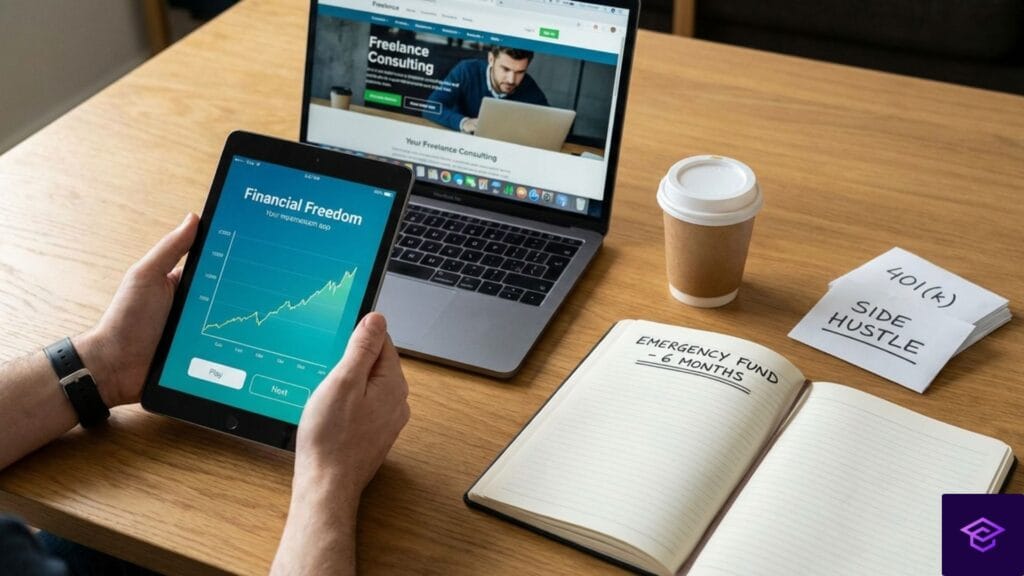
The foundation for how to future proof your career financially: build an emergency fund of 3 to 6 months of expenses. Max out any employer match on your 401(k) — that’s an instant 100% return. And consider a secondary income stream tied to your expertise: freelance work, consulting, digital products. It builds financial resilience and forces you to articulate your skills in ways a regular job never does. A single income source is a single point of failure — and a single point of failure is the opposite of how to future proof your career. Two income streams mean twice the stability when you need to future-proof your career through a market shift. Financial freedom and the ability to future-proof your career are more connected than most people realize.
Strategy 9: Build Transferable Proof of Work to Future-Proof Your Career Across Industries
Credentials are table stakes. What actually separates the people who know how to future proof your career from those who don’t is proof of work — a visible track record of real outcomes you’ve delivered. “Managed a team” tells nobody anything. “Led a team of 8 through a product relaunch that increased retention by 34%” tells everything. That kind of evidence transfers across industries and makes you genuinely harder to pass over — which is why building a proof of work portfolio is one of the most underrated ways to future-proof your career — and one of the most transferable.
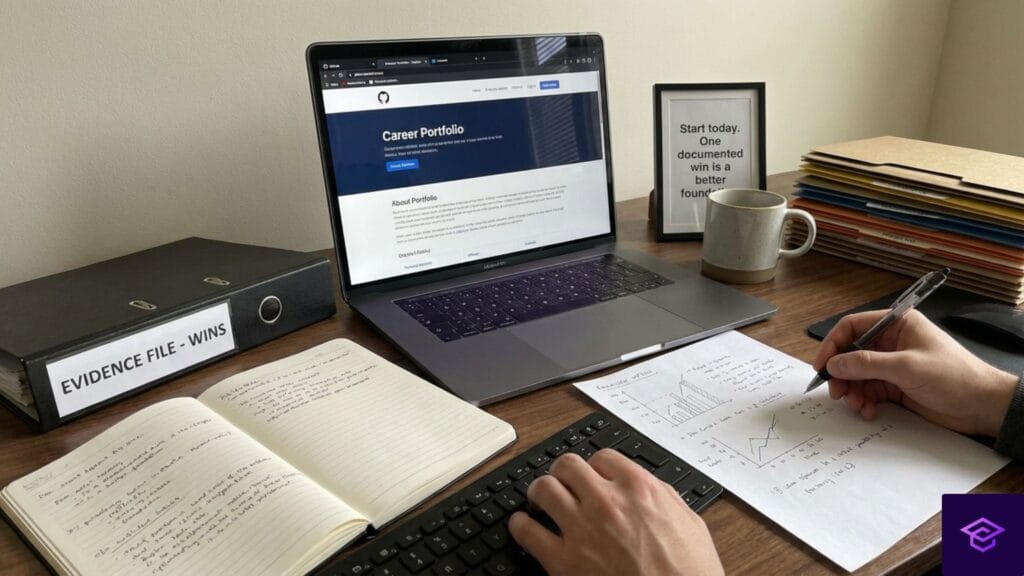
How to Build a Portfolio That Helps Future-Proof Your Career
Start with what you have. Document 5 to 10 projects or outcomes from current or recent roles. Quantify wherever possible — percentages, dollar amounts, time saved, people reached. Publish publicly: GitHub for technical work, a personal site for strategy and writing, LinkedIn case studies for business outcomes. And keep a running “evidence file” where you log wins and positive feedback as they happen. Most people can’t recall what they accomplished 18 months ago when they need it on a resume. This habit means you always have proof ready to future-proof your career during unexpected transitions. It’s one of the simplest, most overlooked ways to future-proof your career across industries without starting over. Start today. One documented win is a better foundation to future-proof your career than ten certifications with no proof attached.
Strategy 10: Treat Your Career Like a Portfolio to Future-Proof It Against Single Points of Failure
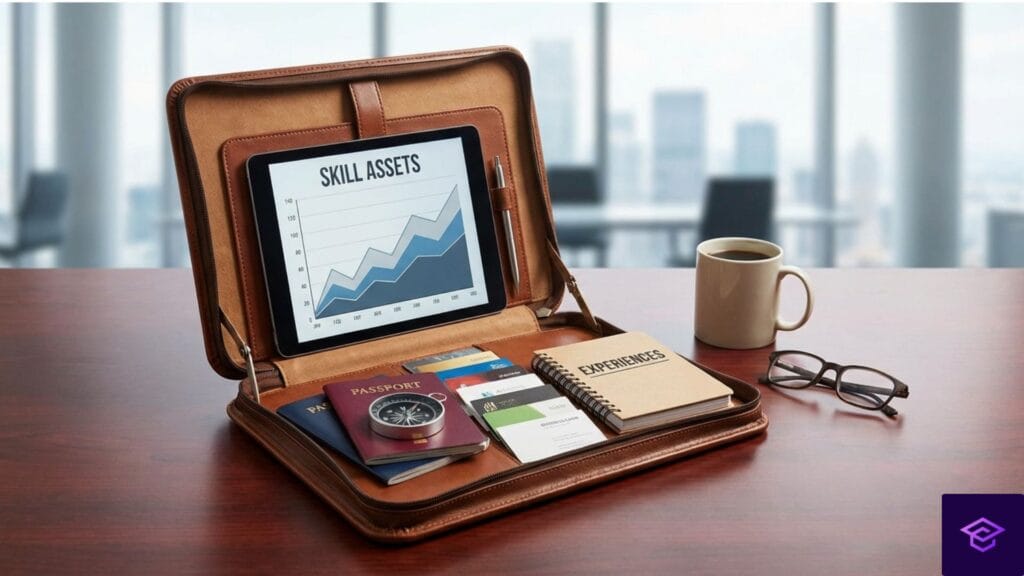
The old model — degree, job, ladder, retire — is dead. To future-proof your career in today’s environment, think like an investor: build a portfolio of skills, relationships, experiences, and income streams rather than betting everything on one role or one industry. This portfolio mindset is the most durable way to future-proof your career against anything the market throws at you. Think of it this way: every single strategy in this guide is one asset in the portfolio you’re building to future-proof your career.
When you want to know how to future proof your career like a portfolio, treat each role as an asset. What skills is it building? What relationships? What does it set you up to do next? Diversify your skill set across technical and human skills, your network across industries, and your professional identity across more than one area of expertise. No single shift — not AI, not automation, not a recession — can wipe out a well-diversified career. That’s what it means to truly future-proof your career: be positioned well no matter what comes next. And when you future-proof your career this way, the next disruption becomes an opportunity — not a threat.
Key Takeaways: How to Future Proof Your Career
- Start with self-knowledge — map your six dimensions first to future-proof your career with precision, not guesswork
- T-shaped skills beat both deep specialization and broad generalism when you want to future-proof your career long-term
- Visibility matters — your career is only as strong as the people who know about it
- AI fluency + human skills + domain depth = the learning portfolio that lets you future-proof your career across multiple shifts
- Financial resilience gives every other strategy room to actually work
- Think portfolio, not ladder — diversification is the deepest way to future-proof your career against the unknown
Frequently Asked Questions About How to Future Proof Your Career
How do I start to future proof my career if I don’t know what direction to go?
Map your career dimensions first — your background, interests, personality, skills, values, and preferences. Understanding your career DNA gives you a foundation to future proof your career intentionally — to make smart moves, rather than randomly chasing trending job titles. CareerMIND’s assessment does exactly this in about 10 minutes — the fastest starting point to future proof your career with precision — because you can’t future-proof your career effectively without knowing yourself first. Self-knowledge is the unfair advantage when it comes to how to future proof your career.
Can you still future-proof your career after 40?
Absolutely. You can still future-proof your career after 40 — the strategies to future-proof your career at this stage often play to your strengths — deep expertise, strong networks, and well-developed judgment are hard to replicate. The key is layering modern skills like AI fluency and visibility onto your existing foundation, rather than starting from scratch.
Will AI make it impossible to future-proof your career?
No, but it changes the approach. Roles most at risk are task-based and repetitive. To future-proof your career against AI, prioritize human skills like complex judgment and creativity, while developing AI fluency so you can direct these tools rather than compete with them.
How long does it take to future-proof your career?
There’s no finish line — it’s an ongoing practice. That said, you can meaningfully future-proof your career within 6 to 12 months of consistent action: clarifying your career DNA, building key skills, and growing your visibility. Make future-proofing your career a habit, not a sprint.
What are the most important skills to future-proof your career right now?
Three buckets will future-proof your career most reliably — and this combination is what separates the people who successfully future-proof your career from those who chase every trend: human skills (communication, critical thinking, emotional intelligence), AI fluency, and deep domain expertise. That combination is how you future proof your career in 2026 — genuinely hard to replace — which is exactly what you want when building career resilience against ongoing disruption.
Ready to Future Proof Your Career — Starting Today?
The gap between people who successfully future-proof their careers and those who don’t usually comes down to one thing: clarity. You can’t future-proof your career without knowing who you are and where you’re going. And when you do have that clarity, every decision you make to future-proof your career gets sharper, faster, and more effective. Clarity is what makes the difference between people who successfully future proof your career and people who stay stuck. When you know who you are, what you’re good at, and where you’re heading, every decision gets easier.
CareerMIND’s AI assessment maps your six career dimensions in 10 minutes and shows you exactly which paths fit your actual profile. At $19/month — less than most people spend on coffee in a week you get a personalized roadmap built on data, not guesswork. The fastest way to know how to future proof your career is to start with clarity, and the fastest way to get that clarity is CareerMIND. Start now and future-proof your career the right way with data, not guesswork. Get yours at careermind.app.day at careermind dot app.